
Summer is often associated with sunshine, vacations, and endless energy.
Yet for many people, the most humid weeks of summer bring exactly the opposite experience.
Instead of feeling refreshed, they feel exhausted.
Instead of feeling energized, they struggle with sluggishness, brain fog, bloating, and a heaviness that seems impossible to shake.
If you’ve ever wondered why summer fatigue seems to arrive whenever the weather becomes hot and humid, you’re not imagining it.
Many people assume they simply need more sleep, another cup of coffee, or greater determination.
Traditional seasonal wisdom offers another explanation.
According to Daoist health teachings, humid weather can create a pattern known as Dampness, making the body feel heavy while slowing both physical and mental energy. Rather than blaming yourself, this perspective encourages you to understand how seasonal conditions influence your body and how you can adapt naturally.
The encouraging news is that your body is designed to work with the seasons.
When you support digestion, choose appropriate seasonal foods, practice the right Life Energy exercises, and adjust your daily habits, you help your body adapt more effectively to humid weather instead of constantly struggling against it.
In this article, you’ll discover why summer fatigue is so common during humid weather, how traditional Daoist wisdom explains the role of Dampness, and practical ways to restore your energy through the Three Pillars of the Total Life Energy Plan.
Why Does Humid Weather Make You Feel So Tired?
Summer fatigue is common during periods of hot, humid weather. Traditional Daoist health teachings describe humidity as creating a pattern known as Dampness, which may leave people feeling heavy, sluggish, bloated, sleepy, and mentally foggy. Supporting digestion, choosing seasonal foods, and practicing Life Energy exercises help the body adapt naturally and restore vitality.
Welcome Back to the Summer Care Series
During the past four weeks, we’ve explored emotional health, sleep problems, excessive sweating, and summer heat.
This week, we turn to another challenge that often arrives quietly but affects millions of people every summer:
Heavy humidity and summer fatigue.
Have you ever noticed that some days don’t seem especially hot, yet you still feel exhausted?
Perhaps your body feels unusually heavy.
Your thinking seems slower.
Simple tasks require more effort than usual.
Or you feel sleepy all day despite getting enough rest.
Many people blame the heat alone.
Traditional seasonal wisdom suggests that humidity often plays an equally important role.
One of the guiding principles of the Total Life Energy Plan reminds us:
The best evaluation is symptoms.
Instead of ignoring these feelings or assuming they’re simply part of getting older, we can ask a more helpful question:
What is my body trying to tell me?
Symptoms such as heaviness, fatigue, bloating, sluggish digestion, and brain fog may be signals that your body is struggling to adapt to humid weather.
Recognizing these early signs allows you to make simple adjustments before summer fatigue becomes overwhelming.
Why Humidity Drains Your Energy
Many people think only temperature affects how they feel during summer.
Yet anyone who has experienced a hot, humid day knows humidity can make the weather feel much more exhausting.
Traditional Daoist health teachings explain this through the concept of Dampness.
Dampness does not simply refer to moisture in the air.
It describes a pattern in which the body begins to feel weighed down from the inside.
People often describe it as:
- Heavy limbs
- Physical sluggishness
- Mental fog
- Sleepiness
- Bloating
- Low motivation
- Feeling tired even after resting
Traditional teachings associate Dampness with the Spleen system, which is responsible for transforming food and fluids into usable life energy.
When this transformation becomes less efficient, many people experience the familiar symptoms of summer fatigue.
Instead of producing abundant energy, the body begins to feel as though its internal engine is slowing down.
This perspective helps explain why humid weather can leave some people feeling far more exhausted than dry heat, even when the thermometer shows similar temperatures.
Recognizing this seasonal pattern is the first step toward supporting your body’s natural ability to restore balance.
Supporting Your Body During Humid Weather
The goal during humid weather is not simply to push through fatigue.
Nor is it to rely on stimulants that temporarily mask exhaustion.
Traditional seasonal living teaches that the body needs support—not more pressure.
When summer fatigue develops, the focus shifts toward helping the body manage Dampness, strengthening digestion, improving circulation, and restoring life energy.
The Total Life Energy Plan teaches that lasting health comes from many small daily habits working together.
During humid weather, these habits include choosing foods that support digestion, avoiding excessive cold foods and iced drinks, practicing the appropriate Life Energy exercises, and listening to your body’s signals before fatigue becomes overwhelming.
A Traditional Pressure Point for Dampness
Traditional self-care includes several acupressure points that have long been used to support the body’s natural ability to manage Dampness.
One of the most commonly used is Spleen 9 (SP9), also called Yin Mound Spring.
To locate the point, find the inside of your knee.
Just below the knee, along the inside of the lower leg, you’ll find a tender hollow near the upper edge of the shinbone.
Using your thumb, apply firm but comfortable pressure for about thirty seconds on each leg.
Traditionally, Spleen 9 has been used when addressing patterns associated with Dampness and fluid retention. Many practitioners include this point in their daily self-care routine during humid weather to help support the body’s natural regulation of fluids.
While acupressure is not intended to replace medical care, it can become another simple habit that encourages the body to restore balance naturally.
Supporting Digestion with Seasonal Foods
One of the guiding principles of the Total Life Energy Plan reminds us:
Food is the best medicine.
The best pharmacy is the kitchen.
Traditional seasonal wisdom teaches that what we eat should change with the seasons.
During periods of heavy humidity, digestion often benefits from foods that are warm, simple, and easy for the body to transform into usable energy.
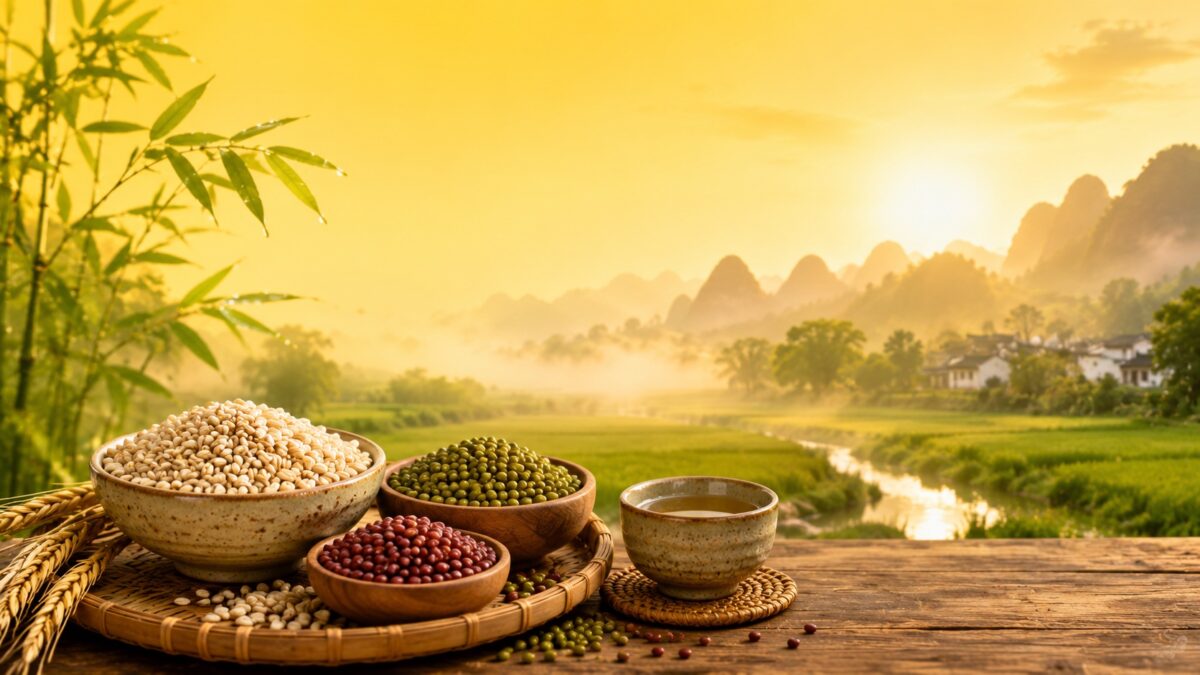
One of the classic traditional foods for humid weather is barley.
For generations, barley has been enjoyed in soups, porridges, and barley tea during hot, humid seasons. Traditional teachings associate barley with helping the body manage excess moisture while reducing feelings of heaviness and sluggishness.
Other traditional favorites include mung beans and adzuki beans, both commonly enjoyed during humid weather as part of simple seasonal meals.
As throughout the entire Summer Care Series, grains remain the foundation of the daily diet, providing steady nourishment throughout the year. Seasonal foods such as barley, mung beans, and adzuki beans complement that foundation while supporting the body’s natural adaptation to humid conditions.
Just as important is what we reduce.
Traditional teachings recommend avoiding excessive cold foods and iced beverages during humid weather. Although they may feel refreshing at first, excessive cold may weaken digestion, making Dampness more difficult for the body to clear.
Supporting digestion helps the body produce the energy it needs instead of allowing summer fatigue to become a daily pattern.
The Best Exercise for Humid Days
Many people assume that feeling sluggish means they need a harder workout.
Traditional seasonal wisdom often recommends something different.
When the body feels weighed down by Dampness, the goal is not simply to burn more energy.
The goal is to build it.
Steelman Qigong is especially valuable during humid weather because it helps strengthen the body, improve circulation, and promote the smooth flow of life energy throughout the entire system.
As circulation improves, many practitioners report feeling lighter, more energized, and better able to overcome the heaviness that often accompanies summer fatigue.
If prolonged humidity has already left you feeling depleted, Longevity Qigong can be added to cultivate, circulate, and store life energy in the Dantian.
Together, these two practices help the body:
- Build life energy.
- Free its flow.
- Sustain both.
Rather than exhausting the body through intense exercise, they strengthen it from the inside out.
Your Complete Summer Fatigue Routine
Recovering from summer fatigue does not require complicated routines.
Consistent daily habits often produce the greatest long-term results.
If humid weather regularly leaves you feeling tired, heavy, or mentally foggy, begin with these five practical steps:
- Recognize the warning signs. Watch for fatigue, bloating, heaviness, sluggishness, sleepiness, and brain fog during humid weather.
- Protect your digestion. Reduce excessive cold foods and iced drinks that may make Dampness more difficult for the body to manage.
- Massage Spleen 9 (Yin Mound Spring). Apply gentle pressure for about thirty seconds on each leg to support the body’s natural regulation of fluids.
- Choose traditional seasonal foods. Continue making grains the foundation of your daily meals while enjoying barley, mung beans, and adzuki beans during humid weather.
- Practice Steelman Qigong daily. Strengthen circulation and help the body overcome Dampness. If fatigue has already depleted your energy, add Longevity Qigong to cultivate and store life energy.
These simple habits help the body work with the season instead of constantly struggling against it.
Featured Wisdom
“When the air feels heavy, don’t force your body to work harder. Help it become stronger.”
Practical Self-Healing Plan
What to Start
- Pay attention to signs of summer fatigue before they become overwhelming.
- Support healthy digestion with warm, simple seasonal meals.
- Build life energy through consistent daily practices rather than relying on temporary stimulants.
What to Reduce
- Excessive cold foods and iced beverages.
- Overeating during humid weather.
- Ignoring persistent fatigue, heaviness, or brain fog.
Foods to Favor
- Make grains the foundation of your daily meals.
- Enjoy barley in soups, porridges, or barley tea.
- Include mung beans and adzuki beans as traditional seasonal foods during humid weather.
- Choose freshly prepared meals that are simple and easy to digest.
Daily Habits
- Eat regular meals instead of skipping them.
- Avoid becoming overly full.
- Stay active with gentle movement throughout the day.
- Listen to your body’s response to humid weather and adjust your routine accordingly.
Exercise Recommendation
Practice Steelman Qigong regularly during humid weather to strengthen circulation, build Upright Energy, and help the body manage Dampness. If prolonged summer fatigue has left you feeling depleted, add Longevity Qigong to cultivate and store life energy in the Dantian.
Key Takeaways
- Summer fatigue often develops during hot, humid weather because the body must work harder to adapt to Dampness.
- Traditional Daoist health teachings associate Dampness with heaviness, sluggishness, bloating, sleepiness, and brain fog.
- Supporting digestion by reducing excessive cold foods and iced drinks helps the body transform food into usable life energy.
- Traditional seasonal foods such as barley, mung beans, and adzuki beans, together with a diet centered on grains, help support the body’s natural adaptation to humid weather.
- Steelman Qigong strengthens circulation and helps overcome Dampness, while Longevity Qigong restores depleted life energy, allowing the body to feel lighter, stronger, and more resilient throughout the humid summer months.
Frequently Asked Questions
Why do I feel so tired during humid weather?
Summer fatigue is one of the most common complaints during periods of high humidity. Traditional Daoist health teachings explain that humid weather may contribute to a pattern called Dampness, leaving the body feeling heavy, sluggish, sleepy, and mentally foggy. Rather than seeing this as a lack of motivation, traditional wisdom encourages us to recognize it as a sign that the body is working harder to maintain balance.
What is Dampness in traditional Daoist health teachings?
In traditional Daoist health teachings, Dampness does not simply refer to moisture in the air. It describes a pattern in which excess moisture weighs down the body’s natural functions. People often experience Dampness as fatigue, bloating, heaviness, sluggish digestion, sleepiness, and brain fog. Hot, humid weather is one of the seasonal conditions traditionally associated with this pattern.
Why can cold foods and iced drinks make summer fatigue worse?
Many people naturally reach for cold foods and iced drinks during hot weather. Traditional seasonal wisdom teaches that excessive cold may weaken digestion by making it work harder to warm food and beverages before they can be transformed into usable energy. When digestion becomes less efficient, Dampness may become more difficult for the body to manage, contributing to summer fatigue, bloating, and heaviness.
What is Spleen 9 (Yin Mound Spring)?
Spleen 9 (SP9), also known as Yin Mound Spring, is a traditional acupressure point located just below the inside of the knee in a tender hollow. For generations, practitioners have used this point when addressing patterns associated with Dampness and fluid retention. Gently applying pressure for about thirty seconds on each leg can become a simple part of a daily summer self-care routine.
Why is barley recommended during humid weather?
Barley has long been used as a traditional seasonal food during hot, humid weather. It is commonly enjoyed in soups, porridges, and barley tea and has traditionally been associated with helping the body manage excess moisture while reducing feelings of heaviness. Other traditional foods often enjoyed during humid weather include mung beans and adzuki beans, all of which complement a balanced diet centered on grains.
Why is Steelman Qigong recommended for Dampness?
Traditional teachings associate Steelman Qigong with strengthening the body, building Upright Energy, and improving circulation. Many practitioners find it especially valuable during humid weather because it helps the body feel lighter and more energized without exhausting it. If summer fatigue has also depleted your energy reserves, Longevity Qigong can be added to cultivate and store life energy in the Dantian.
Can these traditional practices replace medical care?
No. The Total Life Energy Plan shares traditional seasonal health practices that support the body’s natural ability to maintain balance. These practices are intended to complement—not replace—appropriate medical care. If fatigue, swelling, dizziness, or other symptoms are persistent, severe, or unexplained, consult a qualified healthcare professional.
Traditional Wisdom Behind This Topic
For thousands of years, traditional cultures recognized that not all summer weather affects the body in the same way.
Dry heat and humid heat create different seasonal challenges.
Traditional Daoist health teachings explain that humidity has a unique tendency to create Dampness, making the body feel heavy and slowing its natural ability to transform food into usable life energy.
Rather than simply trying to push through exhaustion, seasonal living encourages us to understand what the body is experiencing and adjust our daily habits accordingly.
Dampness: When the Body Feels Heavy
One of the defining characteristics of Dampness is heaviness.
People often describe it as:
- Heavy arms and legs
- Sluggish movement
- Mental cloudiness
- Bloating
- Sleepiness
- Low motivation
- Persistent summer fatigue
Traditional Daoist health teachings view these symptoms as signs that the body’s normal processes are becoming less efficient. Instead of forcing more activity, the focus shifts toward strengthening digestion, improving circulation, and gradually restoring life energy.
Recognizing this seasonal pattern allows us to respond with wisdom instead of frustration.
The Spleen System and Life Energy
Traditional Daoist health teachings associate Dampness with the Spleen system, which is responsible for transforming food and fluids into the nourishment the body needs.
When digestion functions well, the body produces abundant life energy.
When Dampness interferes with that process, people often notice that even eating well does not leave them feeling energized.
This is why traditional seasonal living places such importance on supporting digestion during humid weather through appropriate foods, balanced meals, and healthy daily habits.
Strengthening Instead of Forcing
Modern culture often teaches us to overcome fatigue by pushing harder.
Traditional seasonal wisdom offers another perspective.
When the body is weighed down by Dampness, the goal is not simply to demand more from it.
The goal is to make it stronger.
Support digestion.
Improve circulation.
Choose seasonal foods.
Practice Life Energy exercises.
Protect the body’s resources instead of constantly spending them.
The Total Life Energy Plan summarizes this timeless philosophy in three simple principles:
Build life energy.
Free its flow.
Sustain both.
These principles guide every recommendation throughout the Summer Care Series and provide a practical foundation for lifelong seasonal health.
Continue Your Summer Care Journey
You’ve now completed another important step in the Summer Care Series.
By understanding summer fatigue, you’ve learned why humid weather can leave the body feeling heavy and sluggish, how traditional Daoist health teachings explain the role of Dampness, and how simple daily habits can help restore energy naturally.
Next week, we’ll explore another challenge that often appears during the hottest months of the year:
Summer Digestive Problems: Why Hot Weather Can Upset Your Digestion
You’ll discover why digestion often becomes weaker during summer, how seasonal eating habits influence digestive health, and practical ways to strengthen your body through traditional foods, healthy daily routines, and Life Energy practices.
Each article builds upon the last, helping you develop a complete system for staying healthy throughout the summer—and for many summers to come.
Traditional Wisdom Disclaimer
The information in this article is based on traditional Daoist and traditional Chinese health principles and is provided for educational purposes only. It is intended to help readers better understand seasonal living and support the body’s natural capacity for health. It is not intended to diagnose, treat, cure, or prevent disease. If you experience persistent fatigue, significant swelling, severe weakness, or other concerning symptoms, please consult a qualified healthcare professional.
Continue Learning
The greatest advantage of seasonal living is that its lessons continue to serve you year after year.
Once you understand how your body responds to humidity, heat, food, and the changing seasons, you can make better choices naturally and confidently.
That is the philosophy of the Total Life Energy Plan:
Learning Once, Benefits for Life.
Our Signature Closing
Your energy matters.
Your healing matters.
Learning Once, Benefits for Life.
Unleash your self-healing power with the Total Life Energy Plan.
Lasting health, powered by nature and honored by history.
Health is life energy in abundance.