What is the Complete Summer Care System?
The Complete Summer Care System is a natural seasonal wellness framework based on the Total Life Energy Plan. Instead of treating one symptom at a time, it teaches you how to work with nature by building life energy, freeing its flow, and sustaining both through Life Energy Diet, Life Energy Exercise, and Life Energy Living. These timeless principles help support lasting health not only during summer, but throughout every season of life.
Introduction
Over the past several weeks, you’ve learned how summer can influence nearly every part of your health.
Your emotions.
Your sleep.
Your energy.
Your digestion.
Your body’s ability to regulate heat and fluids.
Your skin.
Your joints.
Each week focused on a different summer challenge. At first, these problems may have seemed unrelated. But as the Summer Care Series unfolded, a larger pattern began to emerge.
Behind every symptom is the same remarkable body, working every moment to maintain balance.
The Complete Summer Care System brings all of those lessons together into one simple, practical framework. Rather than offering isolated remedies, it helps you understand how food, movement, rest, and daily habits work together to support your body’s natural ability to heal and adapt.
This is the heart of the Total Life Energy Plan.
Welcome to the Grand Finale
Congratulations!
By reaching this final article, you’ve completed an entire journey through the Summer Care Series.
Together we’ve explored many of the most common health challenges people experience during summer, including emotional imbalance, sleep problems, excessive sweating, summer heat, humidity-related fatigue, digestive discomfort, skin irritation, and reduced joint freedom.
More importantly, you’ve discovered that these seasonal challenges are not random.
They often reflect how the body responds to changes in weather, environment, and daily habits.
Instead of fighting nature, this series has encouraged something very different:
Work with nature.
When we understand the season, we can make wiser choices.
When we understand our symptoms, we can respond earlier.
When we support the body’s natural processes, better health often becomes easier to achieve.
This final article is not simply a summary of everything you’ve learned.
It is the blueprint that connects every lesson into one complete system—a system you can return to every summer and apply throughout the year.
Because lasting health isn’t built by memorizing hundreds of separate health tips.
It grows from understanding a few timeless principles and applying them consistently.
As we like to say throughout the Total Life Energy Plan:
Learning Once, Benefits for Life.
The Biggest Lesson Summer Teaches Us
Summer is often associated with sunshine, vacations, and outdoor activities.
Yet it also places unique demands on the body.
Heat increases sweating.
Humidity creates heaviness.
Long daylight hours can affect sleep.
Changes in eating habits may weaken digestion.
Extended outdoor activity may challenge your energy reserves.
Traditional seasonal living recognizes that every season has both gifts and challenges.
The goal is not to resist the season.
The goal is to live in harmony with it.
That is perhaps the greatest lesson of the Complete Summer Care System.
Nature is constantly changing.
Healthy habits should change with it.
Instead of following the exact same routine throughout the entire year, traditional wisdom encourages us to adapt our food, movement, work, rest, and daily lifestyle according to the season.
This flexible approach helps the body maintain balance more naturally.
Throughout this series, every recommendation has reflected that simple philosophy.
Sometimes the body needed cooling.
Sometimes it needed warming.
Sometimes it needed nourishment.
Sometimes it simply needed rest.
The answer was never the same every day because the body itself is always changing.
The more we learn to observe these changes, the more intelligently we can respond.
This is why the Complete Summer Care System is more than a collection of seasonal tips.
It is a practical way of understanding health itself.
And once you understand these principles, they continue serving you long after summer has ended.
Health Is Life Energy in Abundance
Throughout the Summer Care Series, one simple idea has connected every article:
Health is life energy in abundance.
This is more than a slogan.
It is the foundation of the Total Life Energy Plan.
Traditional Daoist wisdom teaches that life energy is the invisible force that supports every function of the body. It powers movement, digestion, circulation, thinking, recovery, and adaptation. When life energy is abundant and flows freely, the body is better able to maintain balance and respond to the changing demands of daily life.
Summer provides many examples of this principle.
When excessive heat drains fluids and energy, you may feel tired, thirsty, or irritable.
When humidity slows circulation, you may experience heaviness, fatigue, or stiff joints.
When digestion weakens, the body has more difficulty transforming food into the nourishment it needs.
Each symptom is different.
Yet each points back to the same foundation: supporting the body’s life energy and helping it remain balanced.
This is why the Complete Summer Care System focuses on strengthening the whole person rather than chasing individual symptoms.
The Three Principles That Guide Every Healing Decision
Every recommendation throughout this series has been built upon three timeless principles.
Whenever you experience a health challenge, these three questions can help guide your next step.
1. Build Life Energy
The body needs an abundant supply of life energy to repair itself, adapt to stress, and remain resilient.
Building life energy means giving the body what it needs to thrive.
This includes:
- Eating nourishing seasonal foods
- Getting restorative sleep
- Practicing appropriate Qigong
- Allowing time for rest and recovery
- Living in harmony with the natural rhythms of the day and season
Without sufficient life energy, even small challenges can become difficult to overcome.
2. Free Its Flow
Abundance alone is not enough.
Life energy must also circulate freely.
Traditional teachings compare healthy circulation to a clear, flowing river.
When movement becomes blocked or sluggish, discomfort often follows.
Freeing the flow of life energy may involve:
- Gentle daily movement
- Qigong practice
- Acupressure
- Joint mobility exercises
- Healthy digestion
- Relaxation
- Reducing habits that interfere with the body’s natural balance
As circulation improves, the body is better able to nourish every organ and tissue.
3. Sustain Both
The goal is not to feel better for only a few days.
The goal is to build habits that continue supporting health over time.
Sustaining life energy means creating a lifestyle that works with nature every day—not just when symptoms appear.
This includes consistent routines, seasonal living, mindful choices, and gradual improvement rather than quick fixes.
Small daily habits often become the foundation of lifelong health.
That is why the Total Life Energy Plan emphasizes lasting lifestyle changes instead of temporary solutions.
Symptoms Are Signals, Not Enemies
One principle has appeared repeatedly throughout this entire Summer Care Series:
The best evaluation is symptoms.
Symptoms are often the body’s earliest messages that something needs attention.
Fatigue.
Poor sleep.
Digestive discomfort.
Mood changes.
Excessive sweating.
Joint stiffness.
Rather than viewing these experiences only as problems to eliminate, traditional wisdom encourages us to ask:
What is my body trying to tell me?
Sometimes the body needs more rest.
Sometimes it needs better nourishment.
Sometimes it needs movement.
Sometimes it needs cooling.
Sometimes it needs warmth.
Learning to recognize these signals early allows us to make small adjustments before minor imbalances become larger ones.
Awareness is one of the greatest tools for protecting long-term health.
The Best Healer Is the Body
Another timeless lesson has guided every article in this series:
The best healer is the body.
Every second of every day, your body is repairing damaged cells, balancing countless internal processes, adapting to changes in the environment, and working tirelessly to keep you healthy.
No medicine, exercise, food, or therapy performs this healing on its own.
These practices simply support the remarkable healing ability that already exists within you.
Food nourishes.
Movement strengthens.
Rest restores.
Nature provides the conditions.
But the body performs the healing.
When we respect and support this natural process, healing becomes a partnership instead of a battle.
The Three Pillars of the Total Life Energy Plan
The Complete Summer Care System rests upon three practical pillars that work together to support long-term health.
Life Energy Diet
Your food provides the raw materials needed to build life energy.
Throughout this series, you’ve learned how simple seasonal foods can help the body adapt to summer while supporting balance, nourishment, and vitality.
Food remains one of the most powerful daily choices we make.
As we often say:
Food is the best medicine.
The kitchen is the best pharmacy.
Life Energy Exercise
Movement is essential—but the right movement matters.
Instead of exhausting the body, the Total Life Energy Plan emphasizes practices that cultivate, circulate, and preserve life energy.
Standing Meditation.
Steelman Qigong.
Longevity Qigong.
Gentle stretching.
Joint mobility.
These practices help build strength while supporting the smooth flow of life energy throughout the body.
Life Energy Living
Health is shaped not only by what we eat or how we exercise, but also by how we live.
Daily habits influence every aspect of wellness.
Working.
Resting.
Sleeping.
Thinking.
Managing emotions.
Living in harmony with nature.
Life Energy Living brings these everyday choices together into one practical philosophy for long-term health.
When these three pillars work together, they create a complete foundation for lifelong vitality.
Featured Wisdom
“Lasting health is not built by chasing symptoms. It is built by cultivating abundant life energy, keeping it flowing freely, and living each day in harmony with nature.”
Your Complete Self-Healing Blueprint
The Complete Summer Care System can be summarized in a few simple daily practices:
- Observe your symptoms and listen to your body’s signals.
- Adapt your food, activity, and daily habits to the season.
- Choose foods that nourish and support life energy.
- Practice Life Energy Exercise to build strength and improve circulation.
- Allow time each day for proper rest and recovery.
- Live in harmony with nature whenever possible.
- Remember the three guiding principles:
- Build life energy.
- Free its flow.
- Sustain both.
These simple practices become increasingly valuable with time.
They are not just for one summer.
They are a blueprint for lifelong health.
Key Takeaways
- The Complete Summer Care System brings every lesson from the Summer Care Series into one practical framework.
- Health becomes easier when we work with nature instead of against it.
- Health is life energy in abundance.
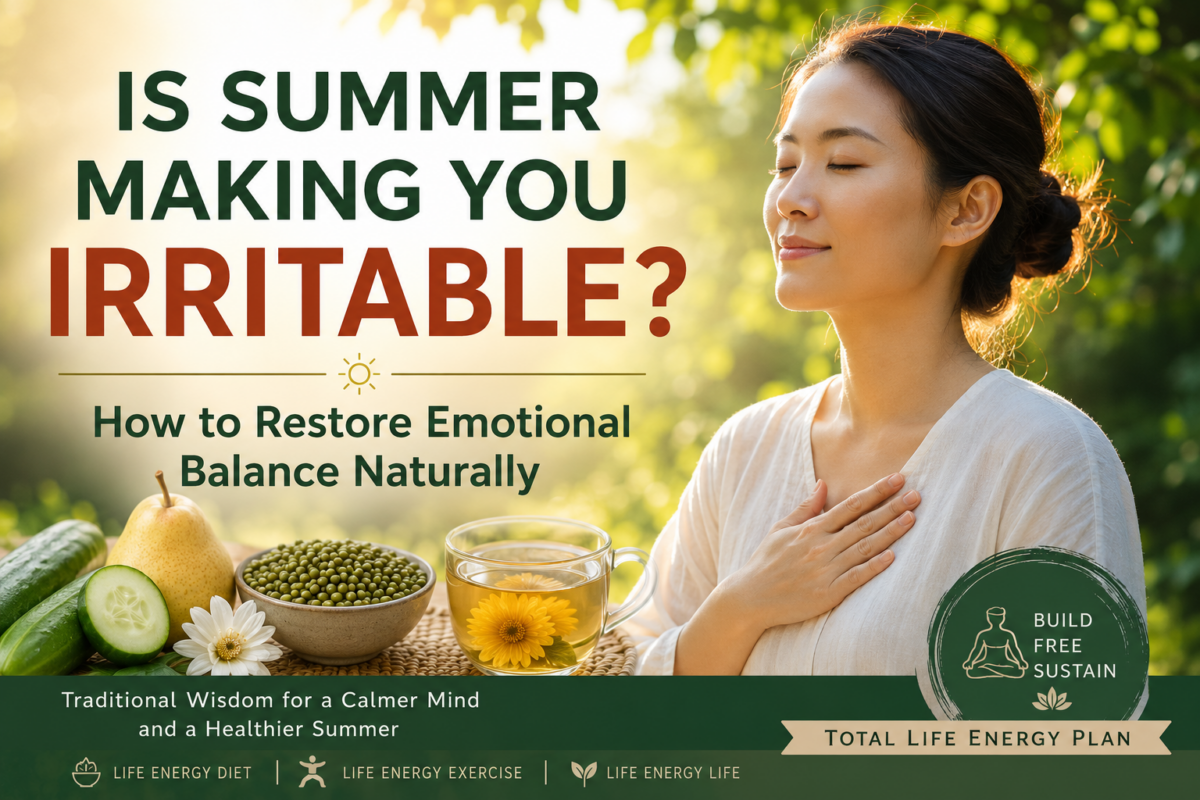
- Every healing decision can be guided by three timeless principles: Build. Free. Sustain.
- Symptoms are signals that help us recognize imbalance early.
- The body is the greatest healer, and healthy habits support its natural abilities.
- Life Energy Diet, Life Energy Exercise, and Life Energy Living form the three pillars of the Total Life Energy Plan.
- Small, consistent habits practiced every day create lasting health.
- Learning Once, Benefits for Life.
Frequently Asked Questions
What is the Complete Summer Care System?
The Complete Summer Care System is a natural seasonal wellness framework based on the Total Life Energy Plan. Instead of focusing on one symptom at a time, it teaches you how to support the body’s natural ability to adapt and thrive by following three timeless principles:
- Build life energy.
- Free its flow.
- Sustain both.
These principles are applied through Life Energy Diet, Life Energy Exercise, and Life Energy Living, creating a practical blueprint for lasting health.
Why does the Complete Summer Care System focus on seasons?
Nature is constantly changing.
Temperature changes.
Humidity changes.
Daylight changes.
Our bodies continuously adapt to these seasonal shifts.
Traditional Daoist wisdom teaches that our daily habits should also adapt to the seasons. When we work with nature instead of against it, maintaining health often becomes easier.
Summer teaches different lessons than winter.
Each season invites us to care for ourselves in different ways.
What does “Health Is Life Energy in Abundance” mean?
Throughout this series you’ve heard one principle repeatedly:
Health is life energy in abundance.
According to traditional teachings, life energy supports every function of the body.
Movement.
Digestion.
Circulation.
Recovery.
Adaptation.
When life energy is abundant and flows freely, the body is better able to maintain balance and respond to everyday challenges.
This simple idea serves as the foundation of the Total Life Energy Plan.
Why are symptoms so important?
One of the central teachings throughout the Summer Care Series is:
The best evaluation is symptoms.
Symptoms are often the body’s earliest messages that something needs attention.
Fatigue.
Poor sleep.
Digestive discomfort.
Mood changes.
Joint stiffness.
Rather than ignoring these signals or fighting them immediately, traditional wisdom encourages us to first ask:
What is my body trying to tell me?
Learning to recognize these messages early allows us to make small adjustments before larger problems develop.
What are the Three Pillars of the Total Life Energy Plan?
The Total Life Energy Plan is built upon three practical pillars:
Life Energy Diet helps nourish life energy through seasonal eating.
Life Energy Exercise helps build and circulate life energy through practices such as Standing Meditation, Steelman Qigong, and Longevity Qigong.
Life Energy Living helps guide how we work, rest, think, sleep, and live in harmony with nature.
Together, these three pillars create a complete lifestyle instead of a collection of isolated health tips.
Can I use these principles all year?
Absolutely.
Although this series focuses on summer, the principles behind the Complete Summer Care System apply throughout every season.
The specific foods, activities, and daily habits may change as nature changes.
But the underlying philosophy remains the same:
Observe.
Adapt.
Support the body’s natural wisdom.
Continue building, freeing, and sustaining life energy every day.
Where should I begin?
You don’t need to change everything at once.
Choose one small habit.
Practice it consistently.
Then gradually add another.
Lasting health grows from daily consistency—not perfection.
As we often say throughout the Total Life Energy Plan:
Learning Once, Benefits for Life.
Traditional Wisdom Behind This Philosophy
For thousands of years, Daoist masters observed that human beings are part of nature—not separate from it.
The seasons change.
The weather changes.
The body changes.
Health comes not from resisting these changes, but from understanding them.
Rather than asking, “How do I fight this symptom?” traditional wisdom asks a deeper question:
“How do I restore harmony?”
That shift in perspective changes everything.
Instead of viewing the body as a machine that occasionally breaks down, Daoist philosophy sees it as a living, intelligent system constantly seeking balance.
Symptoms become messages rather than enemies.
Food becomes daily nourishment instead of simply calories.
Movement becomes cultivation instead of exhaustion.
Rest becomes part of healing rather than wasted time.
Health becomes something we build every day through our relationship with nature.
This timeless philosophy forms the heart of the Complete Summer Care System.
Your Journey Doesn’t End Here
Although this article concludes the Summer Care Series, your self-healing journey is only beginning.
The principles you’ve learned throughout these weeks are designed to become lifelong companions.
Continue observing your body.
Continue learning from nature.
Continue choosing habits that nourish rather than deplete.
Continue building, freeing, and sustaining life energy.
Over time, these small daily practices become a way of living—not just a seasonal program.
If you’ve enjoyed this series, we invite you to continue exploring the Total Life Energy Plan, where you’ll discover deeper teachings on seasonal wellness, nutrition, Qigong, traditional self-care, and lifelong vitality.
Because every day offers another opportunity to cultivate better health.
Traditional Wisdom Disclaimer
The information in this Summer Care Series is based on traditional Daoist principles and Traditional Chinese Medicine and is provided for educational purposes only. It is intended to support seasonal wellness and encourage healthy lifestyle practices. It is not intended to diagnose, treat, cure, or prevent disease. Always consult a qualified healthcare professional regarding any medical condition or persistent health concern.
A Final Thank You
Thank you for joining us throughout the Summer Care Series.
Whether you’ve followed every article or discovered this series today, we hope these timeless principles help you better understand your body, appreciate the wisdom of nature, and cultivate healthier habits for years to come.
Remember:
Health is not built in a single day.
It is created one choice at a time.
One meal.
One walk.
One practice.
One season.
One lifetime.
Our Signature Closing
Your energy matters.
Your healing matters.
Health is life energy in abundance.
Build life energy.
Free its flow.
Sustain both.
Learning Once, Benefits for Life.
Unleash your self-healing power with the Total Life Energy Plan.
Lasting health, powered by nature and honored by history.