
How Can You Build Better Summer Skin Defense?
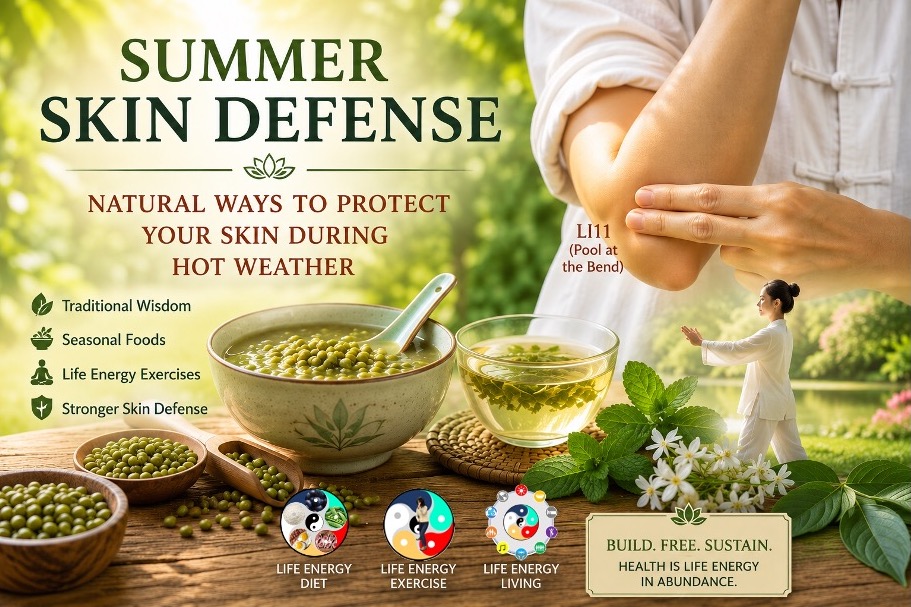
Summer skin defense begins by supporting the body from the inside. Traditional Chinese Medicine teaches that excess summer heat and internal imbalance may contribute to bug bites, itching, rashes, and skin irritation. Seasonal foods, healthy daily habits, acupressure, and life energy practices can help support healthy skin naturally throughout the summer.
Welcome to Week 7 of the Summer Care Series
As summer reaches its peak, many people begin noticing another common seasonal challenge.
Mosquitoes seem impossible to avoid.
Bug bites itch for days.
Skin becomes irritated more easily.
Rashes appear without warning.
Even minor scratches or insect bites seem to take longer to calm down.
Most people assume these problems are simply part of spending more time outdoors.
But traditional seasonal wisdom suggests there may be more to the story.
For thousands of years, Daoist health practitioners observed that the skin often reflects what is happening inside the body. During hot weather, internal heat and seasonal imbalance may make the skin more reactive, more sensitive, and less comfortable.
Instead of viewing bug bites or itchy skin as isolated problems, traditional seasonal living encourages us to strengthen the body’s natural defenses from within.
In this week’s Summer Care article, you’ll learn why summer skin defense becomes more important during hot weather, how Traditional Chinese Medicine explains common summer skin problems, and simple daily practices that help support healthy skin naturally.
As always, our approach follows the Three Pillars of the Total Life Energy Plan:
- Life Energy Diet — nourish the body with seasonal foods.
- Life Energy Exercise — build and circulate life energy.
- Life Energy Living — develop daily habits that work with nature instead of against it.
Together, these three pillars help us build life energy, free its flow, and sustain both.
Why Summer Can Challenge Your Skin
Most people think of summer as the perfect season for spending time outdoors.
But from the body’s perspective, summer also brings unique challenges.
Longer days.
Higher temperatures.
More humidity.
More sweating.
More insects.
More sun exposure.
All of these place additional demands on the body’s ability to maintain balance.
If you’ve ever wondered why mosquitoes always seem to find you first, why your skin becomes itchy every summer, or why small irritations seem more frequent during hot weather, you’re not alone.
These are some of the most common summer skin defense concerns.
According to Traditional Chinese Medicine, the skin is much more than an outer covering.
It serves as one of the body’s first protective boundaries.
When the body is balanced, the skin is better able to adapt to the challenges of summer.
When balance is disturbed, the skin often becomes one of the first places where that imbalance appears.
The body is always communicating.
The skin is one of its most visible messengers.
Looking Beyond the Surface
Modern approaches often focus only on the visible symptoms:
- Bug bites
- Itching
- Redness
- Rashes
- Skin irritation
While treating these symptoms may provide temporary comfort, traditional seasonal wisdom asks a deeper question:
Why has the skin become more vulnerable in the first place?
Instead of viewing the skin as an isolated organ, Traditional Chinese Medicine considers it part of a much larger system involving life energy, circulation, and the body’s relationship with the changing seasons.
Rather than fighting the skin, traditional wisdom encourages us to strengthen the body that supports it.
That simple shift in perspective forms the foundation of summer skin defense.
Instead of asking only:
“How do I stop the itching?”
Traditional seasonal living also asks:
“How can I help my body become more resilient throughout the summer?”
This broader perspective guides everything you’ll learn in this week’s article—from understanding internal balance to choosing seasonal foods, practicing traditional acupressure, and building life energy through gentle daily practices.
The Three Pillars of Summer Skin Defense
Throughout the Summer Care Series, every seasonal challenge is approached through the same simple framework.
Life Energy Diet
Choose foods that traditionally help the body remain balanced during hot weather while supporting healthy skin from within.
Life Energy Exercise
Practice gentle exercises that cultivate, circulate, and strengthen life energy rather than simply exhausting the body.
Life Energy Life
Develop daily habits that work with nature—balancing activity with rest, spending time outdoors wisely, and paying attention to the body’s early warning signs.
Together, these three pillars create a practical and sustainable approach to summer skin defense that extends far beyond temporary symptom relief.
As you’ll see throughout this article, lasting skin health is not only about what you put on your skin.
It’s also about how you care for the body beneath it.
The Traditional View of Summer Skin Health
Traditional Chinese Medicine teaches that the skin is closely connected with the Lung system, which is said to govern the skin and the body’s protective boundary.
This protective boundary is often associated with Wei Qi, sometimes translated as Protective Energy.
According to traditional teachings, Wei Qi circulates near the surface of the body, helping maintain the body’s natural defenses against seasonal influences.
During summer, excessive heat can place additional demands on this protective system.
Many people notice:
- Itchy skin
- Bug bites that seem more irritating
- Redness
- Heat rashes
- Skin sensitivity
- Minor breakouts
Traditional Chinese Medicine often associates these patterns with internal heat rising toward the body’s surface.
Rather than viewing the skin as the problem itself, traditional practitioners see it as an important messenger.
When the body becomes overheated or imbalanced, the skin often reflects that change.
This is one reason summer skin defense begins with caring for the whole body—not simply treating the skin after symptoms appear.
The Common Mistake: Treating Only the Skin
When mosquitoes bite or a rash appears, it’s natural to reach for:
- Bug spray
- Anti-itch creams
- Lotions
- Chemical repellents
- Topical medications
These products certainly have their place.
They may provide temporary comfort or protection.
However, traditional seasonal wisdom suggests that lasting improvement often requires looking beyond the surface.
If the body’s internal balance remains unchanged, skin problems may continue returning throughout the summer.
Traditional health systems encourage us to ask a different question:
How can we strengthen the body so the skin becomes more resilient?
This doesn’t mean ignoring external care.
Instead, it means combining sensible protection with daily habits that support the body’s natural balance.
The goal is not simply fewer bug bites.
The goal is stronger summer skin defense from the inside out.
A Traditional Acupressure Point for Skin Comfort
One traditional self-care practice for summer skin defense is stimulating Large Intestine 11 (LI11), also known as Pool at the Bend.
This point is located at the outer end of the elbow crease.
To find it:
- Bend your elbow comfortably.
- Locate the outer end of the elbow crease.
- Apply firm but comfortable pressure for about 30 seconds on each arm.
Traditional practitioners have long used LI11 when addressing patterns associated with:
- Itching
- Redness
- Heat-related skin discomfort
- Skin irritation
Like the other acupressure points introduced throughout this Summer Care Series, LI11 is not presented as a cure for disease. Instead, it is a traditional self-care practice that may help support the body’s natural balance.
The best doctor is ourselves.
Life Energy Diet: Foods That Support Summer Skin Defense
The Total Life Energy Plan teaches:
Food is the best medicine.
The best pharmacy is the kitchen.
One of the most traditional foods for summer skin defense is mung beans.
For generations, mung beans have been enjoyed throughout Asia during the hottest months of the year.
They are light, easy to digest, and traditionally associated with helping the body remain comfortable during hot weather.
Many people enjoy mung beans as:
- Mung bean soup
- Light porridges
- Simple home-cooked dishes
They pair well with a summer diet centered on grains such as rice, millet, and wheat, complemented by seasonal vegetables and other light seasonal foods.
Rather than relying on highly processed meals, traditional seasonal living encourages eating foods that work with the body’s changing needs.
Small daily choices often produce the greatest long-term results.
Life Energy Exercise: Build Your Skin Defense Naturally
When people think about healthy skin, exercise is rarely the first thing that comes to mind.
Traditional seasonal living sees a much stronger connection.
Healthy circulation.
Balanced life energy.
Calm emotions.
Restful sleep.
All contribute to healthier skin.
For summer skin defense, this week’s featured practice is Standing Meditation.
Standing quietly may appear simple, yet it encourages stillness, body awareness, relaxation, and the smooth circulation of life energy.
It requires no equipment.
No intense effort.
No sweating.
Just a few quiet minutes each day can become a valuable part of a summer wellness routine.
For deeper support, combine Standing Meditation with:
- Steelman Qigong, which helps strengthen circulation and support the smooth movement of life energy throughout the body.
- Longevity Qigong, which helps cultivate, circulate, and store life energy in the Dantian for long-term vitality.
Together, these practices reflect the three guiding principles of the Total Life Energy Plan:
Build life energy.
Free its flow.
Sustain both.
Practical Self-Healing Plan
If you’re experiencing bug bites, itching, rashes, or other summer skin defense challenges, begin with these simple daily practices:
✓ Pay Attention to Your Skin
View recurring irritation as a signal that your body may need additional support rather than simply something to hide or ignore.
✓ Support Internal Balance
Don’t rely only on external sprays and creams. Build healthy daily habits that strengthen the body from within.
✓ Massage LI11 (Pool at the Bend)
Apply firm but comfortable pressure for about 30 seconds on each arm whenever heat-related skin discomfort appears.
✓ Eat Traditional Seasonal Foods
Enjoy grains as your daily staple, along with mung beans and other light seasonal foods that have traditionally been used during hot weather to help maintain balance.
✓ Spend Time Outdoors Wisely
Enjoy gentle morning sunlight whenever possible, and consider taking a short Heart Nap around noon to help the body recover during the hottest part of the day.
✓ Practice Daily Life Energy Exercises
Practice Standing Meditation regularly, and combine it with Steelman Qigong and Longevity Qigong to help build, free, and sustain life energy throughout the summer.
Key Takeaways
- Summer skin defense begins by supporting the body from the inside.
- Traditional Chinese Medicine associates healthy skin with the Lung system and Protective Energy (Wei Qi).
- Internal heat may contribute to itching, bug bites, redness, and skin irritation.
- Treating only the skin may overlook deeper seasonal imbalances.
- Large Intestine 11 (Pool at the Bend) is a traditional acupressure point often used for heat-related skin discomfort.
- Mung beans have long been enjoyed as a classic seasonal food during hot weather.
- Standing Meditation, Steelman Qigong, and Longevity Qigong work together to help build, free, and sustain life energy.
- Consistent seasonal habits support healthier skin not only this summer, but for many summers to come.
Frequently Asked Questions
Why do I get more bug bites during summer?
Warmer weather brings more mosquitoes and insects outdoors, but traditional seasonal wisdom also encourages us to pay attention to the body’s internal balance. Summer skin defense may become weaker when excessive heat and seasonal imbalance affect the body. While insects are part of the environment, strengthening your overall health may help your body remain more resilient throughout the summer.
Why does my skin become itchy every summer?
Itching is one of the most common summer skin defense concerns. Traditional Chinese Medicine teaches that excessive internal heat may rise toward the surface of the body, contributing to itching, redness, rashes, or irritation. Paying attention to these early signs can help you make seasonal adjustments before discomfort becomes more severe.
What foods support healthy summer skin?
One of the classic traditional foods for summer skin defense is mung beans. For generations, mung beans have been enjoyed during hot weather because they are light, easy to digest, and traditionally associated with helping the body remain comfortable during summer. They pair well with a diet centered on grains, together with seasonal vegetables and other simple seasonal foods.
What is Large Intestine 11 (Pool at the Bend)?
Large Intestine 11 (LI11), also known as Pool at the Bend, is a traditional acupressure point located at the outer end of the elbow crease. Traditional practitioners often stimulate this point when addressing patterns associated with itching, redness, skin irritation, and excess heat. Gentle pressure for about 30 seconds on each arm is commonly included in traditional self-care routines.
Can Standing Meditation really support skin health?
Standing Meditation is not a skin treatment. However, the Total Life Energy Plan teaches that healthy skin reflects the overall condition of the body. Standing Meditation helps cultivate calmness, improve body awareness, and support the smooth circulation of life energy. Combined with Steelman Qigong and Longevity Qigong, it becomes part of a complete approach to summer skin defense.
Should I stop using bug spray or anti-itch cream?
No. Traditional seasonal living does not suggest abandoning sensible outdoor protection or appropriate skin care. Instead, it encourages combining practical external protection with healthy daily habits that strengthen the body from within. Supporting internal balance and protecting the skin work best together. Using the bug spray or anti-itch cream make from natural materials such as herbs are preferred than chemical products.
Can these traditional practices replace medical treatment?
No. The Total Life Energy Plan shares traditional seasonal wellness practices for educational purposes. These practices are intended to support the body’s natural ability to maintain balance, not to diagnose, treat, cure, or prevent disease. If you experience severe allergic reactions, widespread rashes, skin infections, difficulty breathing, or persistent skin problems, seek care from a qualified healthcare professional.
Traditional Wisdom Behind This Topic
For thousands of years, traditional cultures viewed the skin as much more than the body’s outer covering.
The skin was seen as one of the body’s first lines of communication with the outside world.
Rather than focusing only on what appears on the surface, traditional seasonal living asks a deeper question:
What is the body trying to tell us?
The Lung Governs the Skin
Traditional Chinese Medicine teaches that the Lung system governs the skin and helps regulate the body’s protective boundary.
This protective boundary is associated with Wei Qi, often translated as Protective Energy.
When Wei Qi is strong, the body is traditionally believed to be better prepared to adapt to changing environmental conditions.
When it becomes weakened or disrupted, the skin may become more reactive, sensitive, or easily irritated.
Whether or not you experience bug bites, itching, or summer rashes, this traditional perspective reminds us that healthy skin begins with caring for the whole body.
Healthy Skin Reflects Internal Balance
Modern skin care often focuses on products applied to the outside of the body.
Traditional seasonal living begins from the inside.
Food.
Movement.
Rest.
Daily habits.
Emotional balance.
Seasonal living.
Each of these influences the body’s overall condition, and the skin often reflects that internal balance.
The Total Life Energy Plan teaches that lasting wellness comes from strengthening the body’s natural ability to care for itself rather than relying only on temporary solutions.
Build Protection from Within
The purpose of summer skin defense is not simply avoiding bug bites.
It is helping the body become more resilient throughout the hottest months of the year.
This is why every week in the Summer Care Series returns to the same timeless principles:
Build life energy.
Free its flow.
Sustain both.
As life energy becomes stronger and flows more freely, the body is better supported in maintaining comfort, balance, and resilience throughout the changing seasons.
Continue Your Summer Care Journey
You’ve completed another important step in the Summer Care Series.
This week you’ve learned that summer skin defense is about much more than avoiding mosquitoes or treating itchy skin. By understanding the connection between internal balance, seasonal living, and healthy skin, you’ve gained practical tools that can help you enjoy summer more comfortably year after year.
Next week, we’ll explore another common seasonal challenge:
Summer Joint Pain: Why Heat and Humidity Can Leave You Stiff and Achy
You’ll discover why some people experience stiff joints and sore muscles during summer, how traditional seasonal wisdom explains these changes, and simple daily practices that help support comfortable movement naturally.
Each week builds upon the previous one, creating a complete roadmap for healthier seasonal living.
Traditional Wisdom Disclaimer
The information in this article is based on traditional Daoist and Traditional Chinese Medicine principles and is provided for educational purposes only. It is intended to help readers better understand seasonal living and support the body’s natural capacity for health. It is not intended to diagnose, treat, cure, or prevent disease. If you experience severe allergic reactions, rapidly spreading rashes, signs of skin infection, difficulty breathing, or persistent skin conditions, consult a qualified healthcare professional promptly.
Continue Learning
Healthy skin is not built overnight.
It reflects the daily choices we make about food, movement, rest, and how closely we live with the rhythms of nature.
The more you understand how the changing seasons influence your body, the better prepared you are to support your health naturally for years to come.
That is the philosophy of the Total Life Energy Plan:
Learning Once, Benefits for Life.
Our Signature Closing
Your energy matters.
Your healing matters.
Learning Once, Benefits for Life.
Unleash your self-healing power with the Total Life Energy Plan.
Lasting health, powered by nature and honored by history.
Health is life energy in abundance.